


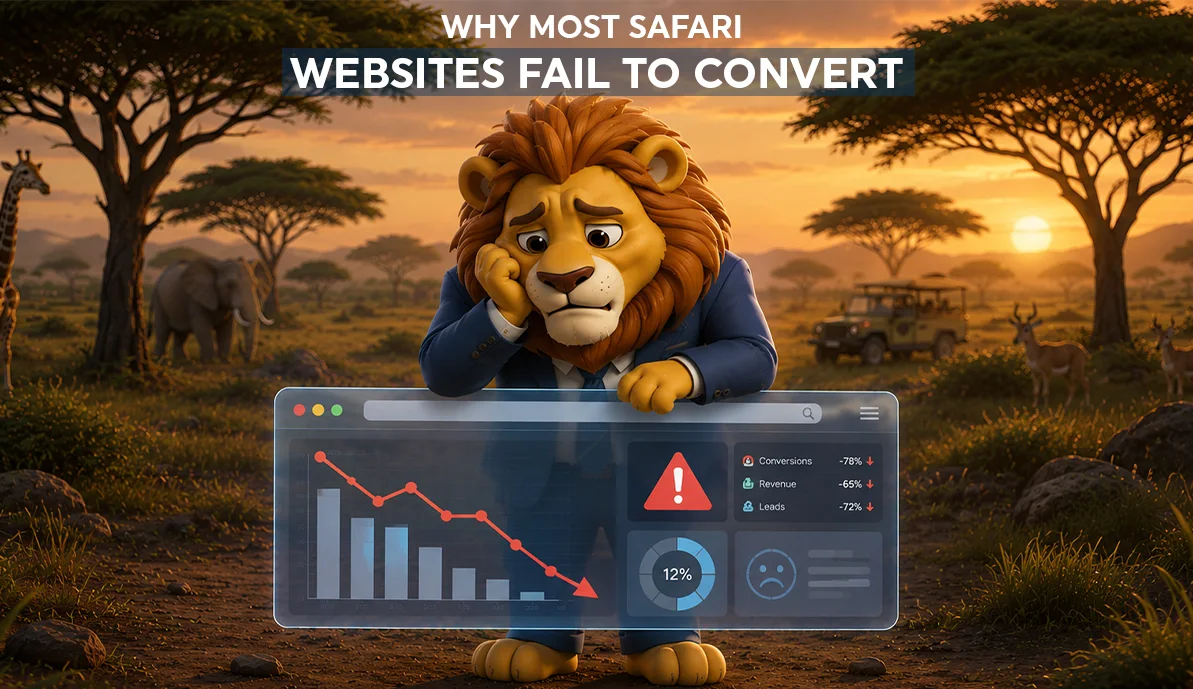
At times, the safari travel industry is visually magnificent and emotionally compelling. Many safari businesses do struggle to turn website visitors into actual bookings. Even with investment in beautiful imagery and detailed itineraries, conversions remain low. Now the question is: why travel websites don’t convert visitors, and what exactly can you do about it? Time to break down the biggest issues of all time and how to exactly fix them with smarter safari website design and its unique strategy.
Why Do Safari Websites Have Low Conversion Rates?
The main reason for poor performance is weak website optimization for Safari. Several businesses focuses too much on aesthetics and certainly ignore usability and intent.
Some of the common causes are as follows:
- Lack of clear calls to action (CTAs)
- Existences of complicated booking processes
- Slow loading speeds
- Unclear pricing or packages
- Poor mobile experience
Normally, these issues certainly affect travel website conversion rates, safari website optimization, and tourism website UX, leading users to leave before taking action. The major factors is that of trust. Safari trips are generally expensive and often international. If your website doesn’t instantly build credibility, users won’t feel comfortable booking.
What Makes a Travel Website Convert Better?
High-performing safari websites are designed with the overall user journey in mind. The best design for a safari tour website balances both inspiration and functionality. Some of the critical elements include the following:
1.Clear and Compelling CTAs
Buttons like “book your safari”, “get a quote”, and “plan your trip” should be equally persuasive and visible in nature.
2.Simplified Navigation
Users should always be able to find destinations, packages, and pricing within a split second.
3.High-Quality Visuals with Purpose
It is the image that certainly inspires action and doesn’t just decorate the webpage.
4.Trust Signals
Always trust signals, including those of testimonials, certifications, reviews, and secure payment icons.
5.Mobile Optimization
While a large percentage of users browse on mobile devices, a poor mobile UX instantly diminishes conversions.
When all these elements come together, they improve the travel website conversion rate, safari website optimization, and tourism website UX.
How Can I Increase Bookings on My Safari Website?
If you are wondering how to improve safari booking conversion rate, start by fixing the fundamentals.
1. Streamline the Booking Process
Do avoid long forms and unnecessary steps. Definitely offer quick inquiry options and instant booking where possible.
2. Include persuasive content
Highlight the individual experience, the chance to see animals and the local culture. Most importantly, benefits not features.
3. Generate urgency and scarcity
It should urge people to act now whether through a limited time offer or seasonally available
4. Answer Search Intent
Try to pinpoint what a user is really looking for, and create content around that topic.
5. Improve website speed
If your website loads slowly, people leave. Speed is the main factor in conversions and SEO. Therefore, by implementing these methods, you address why travel websites never convert visitors and move toward optimum performance.
What Are the Most Common UX Mistakes in Travel Sites?
Several businesses unknowingly repeat similar UX mistakes, especially on travel websites. It hurts both engagement and conversions. Here are some of the biggest travel website mistakes:
-
Overloaded Pages
While too much information overwhelms all kinds of users. Try to keep the content clean and well-structured.
-
Hidden Pricing
If users can’t find pricing easily, they will lose all trust and can leave.
-
Confusing Navigation
When it comes to confusing navigation, complex menus make it hard for users to explore new options.
-
Lack of Personalization
While generic content fails to connect with different traveler types severely.
-
Poor Mobile Experience
It is the non-responsive design that frustrates both users and increases your bounce rates.
Fixing these common UX mistakes on travel websites is critical for improving overall performance.
Does Website Speed Affect Safari Bookings?
At Markethix, our expert believes that speed plays a critical role in both SEO and conversions.
While a slow-loading website can perform the following tasks:
- Reduce user engagement rate
- Increase the bounce rate
- Lower down the search rankings
If you really want to reduce the bounce rate, even on travel websites, improving speed is the fastest way to win.
Some of the best practices include the following:
- By using fast hosting
- Compress the images
- Minimalization of unnecessary scripts
- Enabling caches
A one-second delay can certainly impact your travel website conversion rate, safari website optimization, and tourism website UX.
How to Reduce Bounce Rate on Travel Websites?
Reducing bounce rate is absolutely critical for increasing conversion. Here is how it exactly happens:
- Deliver what users exactly expect
- Match your content with ultimate search intent
- Engage immediately
- Usage of strong headlines and visuals above the fold
- Bring improvement regarding readability
- Usage of short paragraphs, bullet points, and clear headings
- Even though it guides the user journey
- Do lead visitors toward actions with strategic CTAs.
- Even ensure fast load times
- Speed always impacts user retention
Bottom Line
Despite having so much potential, websites can clearly result in a failed opportunity if implemented with error. It can be anything from a poor safari website design to basic travel website blunders that result in major booking loss.
The answer is to understand why your travel website is failing to convert and close these gaps with improved UX, website speed and design with your users in mind. Implement smart safari website optimization techniques while ensuring you don’t make common UX errors with travel websites and you can dramatically increase your travel website conversion rate safari website optimization tourism website UX. In short do make it simple, aspirational and trustworthy by nature.


 Call :
  Email:
0 Comments