

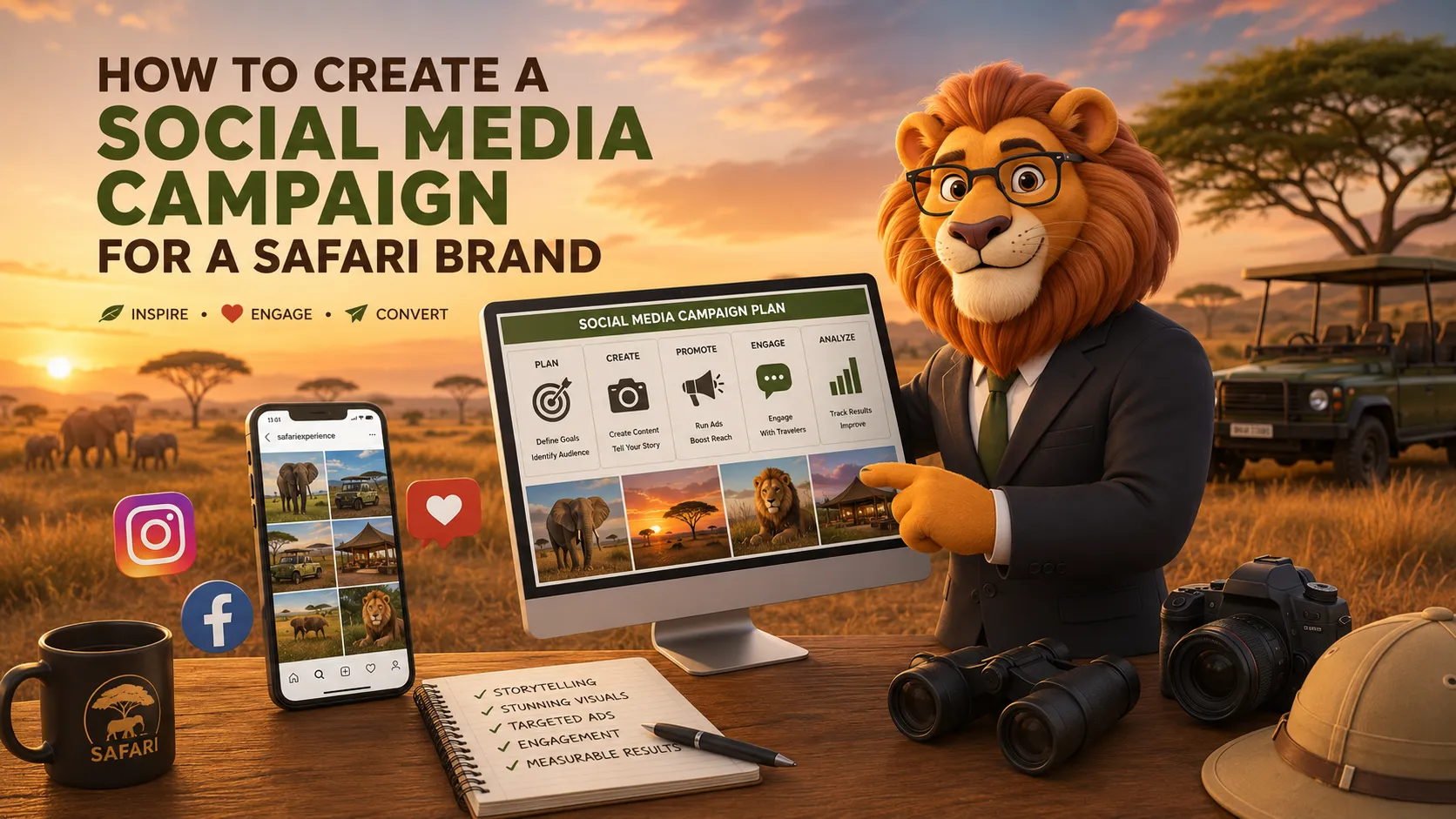
For your safari brands, social media is the best place to start connecting with travelers, earning their trust, and increasing bookings. Modern travel consumers not only seek destinations but also compare safari packages and interact with brands on social platforms long before they book.
Thus, if you’re a safari lodge, a tour operator, or a safari travel agency, you must have an online-centric brand marketing strategy to increase your brand presence.
In a social media for safari marketing, it’s never enough to post travel snaps of wildlife. However, it is a detailed 7-step strategy for creating and implementing an effective Safari Social Media Campaign to not only promote your brand, but also inspire travelers, and convert them into paying customers. When well designed, safari social media campaigns can effectively inspire people in their dream stages and drive them to enquire or book with your brand.
Why is social media important to travel agents?
Safari’s travel category is highly experiential, and it naturally falls within The Experience. The beauty of this particular tourism category means that our industry naturally lends itself to Instagram!
People want to know where to go on safari
From wild animal sightings to luxurious tented accommodations and spectacular landscapes, safari social media marketing campaigns offer perfect avenues for safari brands to build presence and sell tours, packages, or accommodations directly.
- Increase reach to global safari travelers.
- Promote packages and seasonal experiences.
- Build loyalty and guest advocacy.
- Drive traffic and inquiries to the safari business website
- Strengthen the brand equity of your safari business
So, how can I make my Safari company’s brand reach travelers globally with an online campaign? Let’s look at this detailed guide:
Step 1: Define Your Safari Social Media Campaign Objective
This is the foundational step. What is the ultimate goal? For a Safari Company, the objective should be to increase bookings for a specific package; generate leads through inquiries or website clicks; increase engagement and reach on specific posts or the account; or build awareness of a new safari camp/destination, etc.
Your objective directly leads your strategy and measurement for success. If your goal is to receive more inquiries, your Call To Action must guide readers to an inquiry form, a “request a quote” page, or a “plan your safari” page. If the goal is to increase sales, the call to action could be “book now”.
Step 2: Understand Your Target Audience for your Safari Company
- Who do you want to sell safari holidays to?
- Is it for honeymoon couples?
Luxury wildlife photographers, birding enthusiasts, adventurers, wildlife photography novices, honeymoon packages, or families seeking a fun-filled yet educational vacation? This analysis should inform the tone, content type, and chosen communication channels.
By defining and segmenting your safari audience, you can tailor your brand marketing and content strategy effectively. A Safari brand marketing agency like Markethix resonates with a particular audience segment and achieves higher engagement rates and conversion.
- All the luxury travelers who seek out high-end safari tours
- Couples & honeymooners wanting an intimate, romantic African trip
- Wildlife photographers seeking unique, photographic encounters
- Family holidays to explore and learn more about Africa’s flora and fauna
- Adventure & authentic cultural immersion trips in Africa
Step 3: Choose the Right Platforms
Where do travelers plan and draw inspiration before booking safari trips? Some platforms cater better to this need than others.
1.Instagram
On Instagram, visuals do matter!
Use High-Quality Photos/Videos
It is arguably the best place for travel businesses to engage in safari social media marketing, given how visually rich these destinations are. Instagram reels to show off video moments like wildlife encounters; Stories to create behind-the-scenes content of lodges and game-drive experiences; carousel posts for packing lists and destination insights; and, finally, static posts to showcase breathtaking landscape views and animals.
2.Facebook
More information and interactions
While visuals still count here. Therefore, Facebook for safari Brand Marketing also allows writing more elaborate posts on travel tips, Itineraries, customer reviews, lodge amenities, etc. Facebook’s advertising platform offers powerful options for targeted advertising, reaching specific demographics interested in wildlife or luxury travel, and retargeting potential clients.
3.YouTube
For immersiveness and longer format content, for example, lodge tours, long version game drive video snippets, or a full 20-minute in-depth video on what’s on for a safari experience.
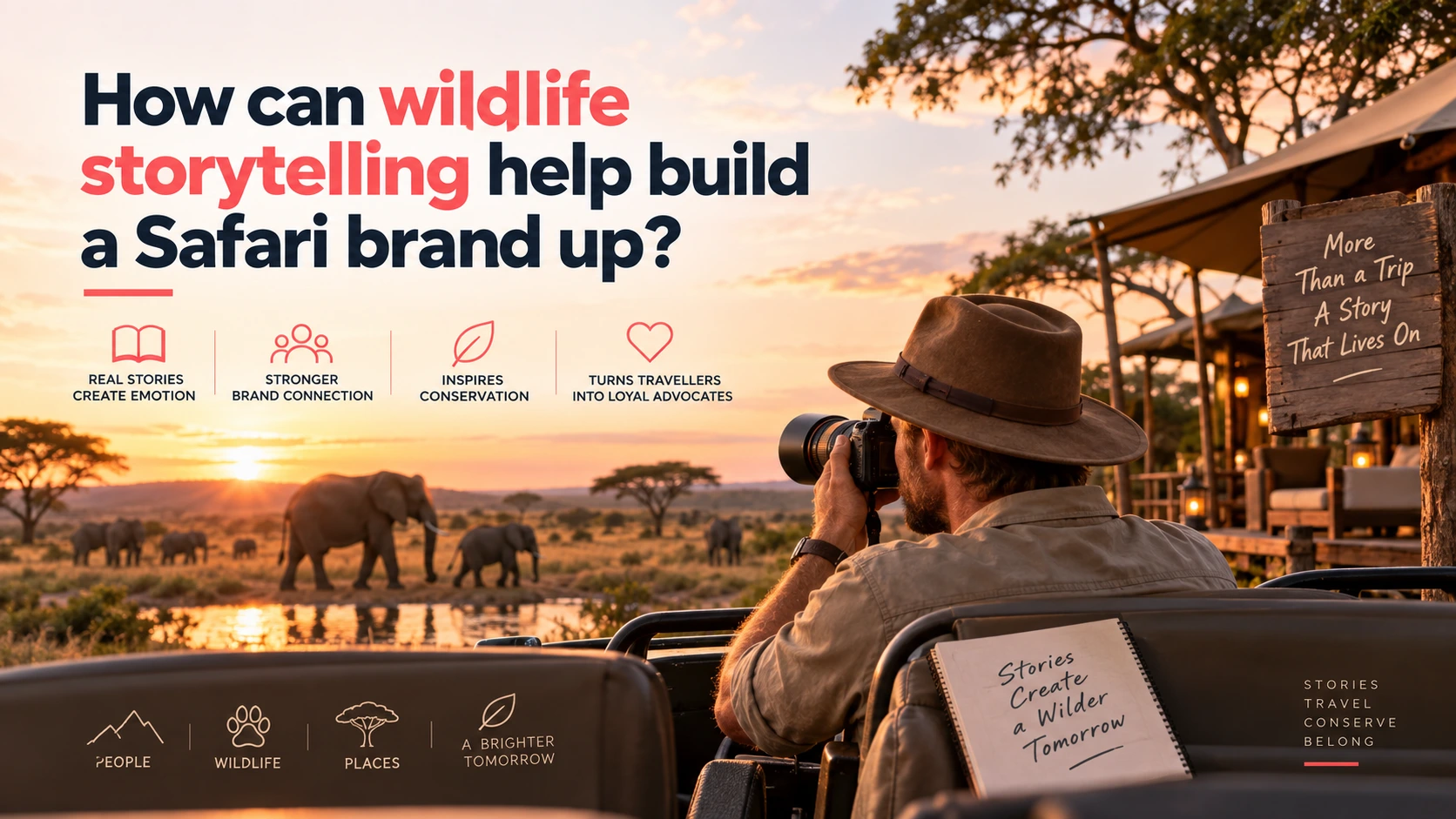
Step 4: Craft Your Content Strategy: Storytelling is Key
Content is not limited to beautiful images. Your social media strategy for the safari business must tell a story that engages travelers through an emotional journey and an educational path. For a safari brand, content could include, but is not limited to:
- The drama of a hunt/predator – observer’s emotions
- The beauty of the animal – describe movement, colors
- Breathtaking landscape of wildlife areas.
- What’s it like staying in one of safari’s best lodgings?
- How your safari helps protect conservation projects/local communities
Focus on Emotional and Experiential Storytelling
Instead of asking people to ‘book a safari’, take them into the feeling. ‘Waking up to the dawn call of lions as the sun pierces through the horizon, painting the vast African plains in hues of gold and pink.’ It is about building an emotional connection that will inspire travelers to plan their dream safari.
Step 5: Integrate Paid Advertising
The organic reach is increasingly limited. Therefore, safari marketing companies like Markethix should consider using paid social media advertisements to amplify their reach among potential travelers. The advertising platforms of Instagram and Facebook enable you to run highly targeted advertising campaigns to specific demographics, interests, travel behaviors, and locations of potential travelers.
From the high-end to the low luxury segment, to individuals planning a family safari tour. The retargeting option is crucial here, as it lets you engage website visitors who haven’t made any purchases or inquiries with follow-up ads on Facebook and Instagram.
Step 6: Monitor, analyze, and iterate
Last, you’ll need to measure the performance of your social media campaigns for Safari brand marketing and adjust strategy accordingly.
What metrics should you monitor?
- Impressions and Reach
- Engagement rate
- Website clicks (to safari package pages, booking forms, blogs)
- Conversion rate of lead to customer
- Click-through rates
If, for instance, you see that video content leads to a high engagement rate and better conversion for safari inquiries, consider investing more resources into producing quality safari video content and distributing it efficiently across your chosen channels. It all comes down to tracking and adapting!
Conclusion
Implementing a powerful and successful social media strategy is an absolute game-changer for any safari travel company. Your content will engage customers when they’re dreaming, educating them when they are considering, and ultimately converting them into loyal travelers. As a safari lodge or safari tour Operator, a focused social media plan for safari by Markethix isn’t an ‘option’ in this modern travel-centric era; it’s an essential driver of success.

 Call :
  Address :
  Email: