

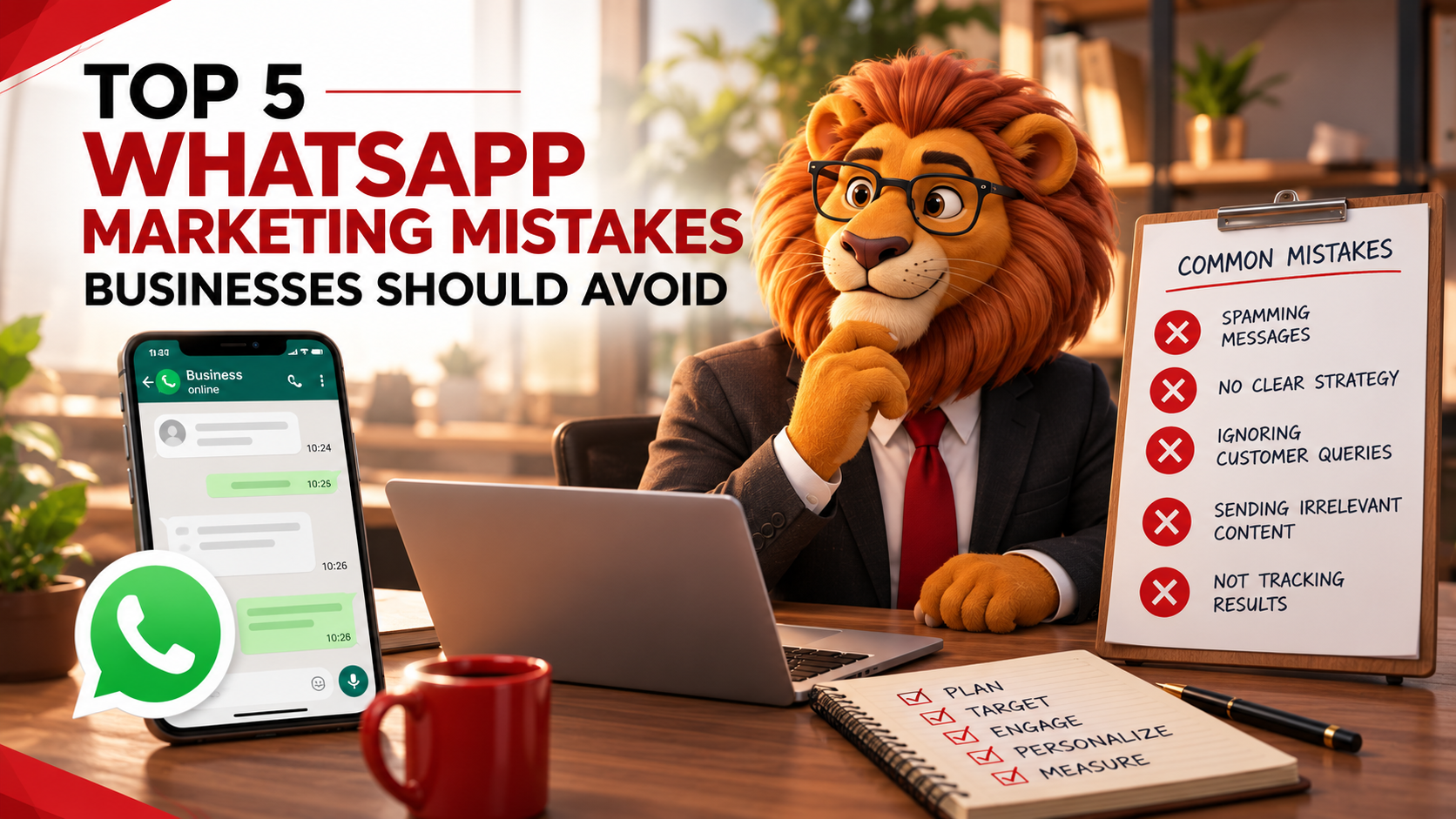
Recently, WhatsApp has become a valuable communication platform for businesses to engage directly with customers. For safari operators, tour companies, lodges, camps, and travel brands, it can support Q&A, itinerary conversations, booking updates, offers, and customer engagement.
While WhatsApp messages can generate more leads, they don’t always translate into success. Without a solid WhatsApp marketing strategy, you can end up bombarding customers, losing leads, or seeing a drop in interest. Here are five WhatsApp marketing mistakes to avoid.
5 WhatsApp Marketing Mistakes To Be Avoided by a Business
1. Sending Too Many Promotional Messages
The mistake you can make is assuming every customer interaction is about marketing or selling; it’s often about the same goal. So rather than only seeing promotional messages, a safari operator or other company should be sharing destination tips, wildlife guides, travel planning tips, updates on the season and destination, and relevant itinerary ideas, all of which can be in addition to promotions. A great WhatsApp marketing strategy doesn’t just bombard users with messages.
2. Not Segmenting Your Audience
Your contacts are varied – their interests, budgets, future travel, and the journey they are on are all different. Messaging every contact in the same way may not make your communication relevant to all.
The business should also segment its audience by previous inquiries, destination of interest, travel date, customer type, and whether they have already booked.
For example, a traveler searching for a luxury Tanzania safari should be receiving a more specific message than someone asking about a budget family safari. Audience segmentation can help make WhatsApp communication more relevant.
3. Ignoring Customer Inquiries
WhatsApp users usually prefer quick, easy conversations. Customers are likely to choose a different supplier if your business doesn’t reply quickly.
This is especially important for safari operators, where guests may ask multiple questions about the lodge, transportation, activities, location, price, and availability before booking.
You need a consistent process to track incoming messages and manage questionnaires. You can automate a greeting to identify an inquiry and route more extensive discussions to the appropriate team.
4. Using Generic Messages Without Personalization
A one-size-fits-all type message might go out to a customer, but it might not be engaging. Personalization helps make your WhatsApp communication more relevant.
Rather than broadcasting the same message to all customers, businesses can use the information they have to communicate with each customer specifically. For example, a safari operator could pull a customer’s destination, previous inquiry, trip dates, or experience.
A safari WhatsApp marketing agency like Markethix can help you create travel campaigns that include audience segmentation, messaging, content, planning, and lead follow-up.
5. Not Tracking Campaign Performance
Sending WhatsApp campaigns without tracking results is a mistake because you can’t see which message led to inquiries, responses, or bookings.
Companies must set specific campaign goals and track metrics like messages sent, reply rates, inquiries, conversions, and customer interactions. Companies can also use this information to tailor future campaigns more effectively. For example, a corporate website can provide far more response by preparing for visitors than by relying on the advertiser. They can then direct their marketing accordingly.
Build a Better WhatsApp Marketing Strategy
Businesses should see WhatsApp as a valuable communications tool, but only if communication is meaningful, timely, and customer-centric. Don’t bombard customers with messages, rely on poor segmentation, reply slowly, send unpersonalized messages, or fail to measure results.
A safari WhatsApp marketing agency could assist you in planning campaigns, devising customer journeys, creating content, and supporting lead engagement for safari operators and travel brands.
A good WhatsApp marketing strategy is about more than sending more messages. It means having conversations that serve your customers, supporting them from curiosity to research to booking.



 Call :
  Address :
  Email: